
How to Fix a Car Charger That Stopped Working

Test the car outlet with a different device first, then check the fuse, cable, and charger in that order. One bad part is usually all it takes. If you ignore it, you may lose phone power, GPS, or dashcam support on the road. This guide shows how to isolate each part by symptom so you can replace only the broken piece.
Car charger decision tree
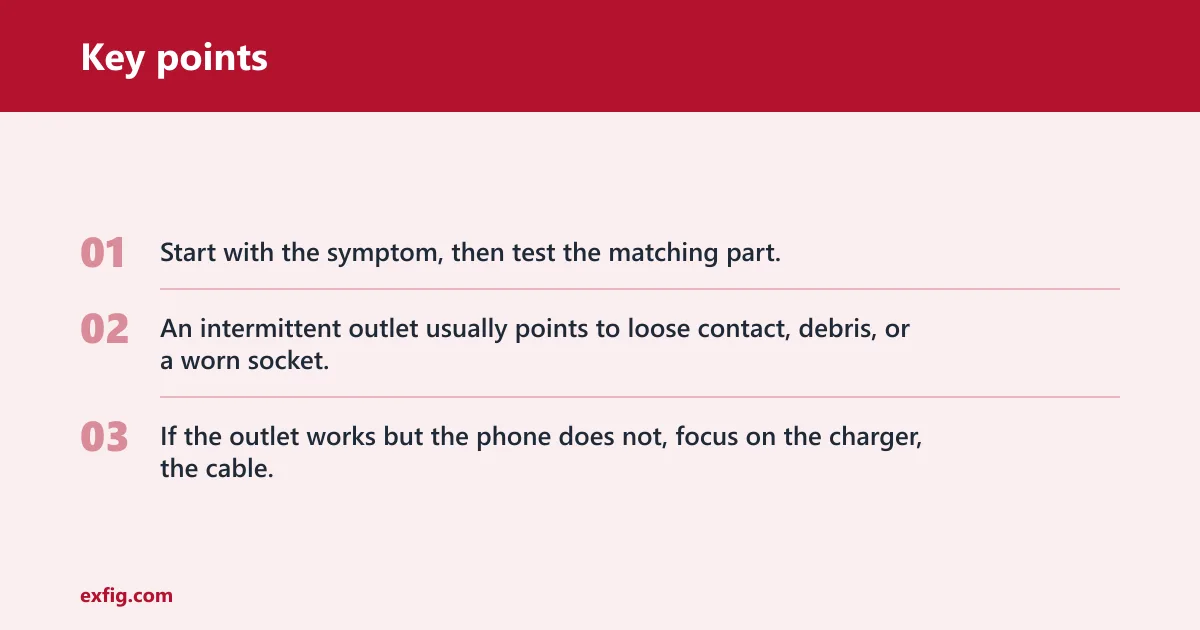
Start with the symptom, then test the matching part. A dead outlet points to the vehicle side. An intermittent outlet usually points to loose contact, debris, or a worn socket. If the outlet works but the phone does not, focus on the charger, the cable, or the device’s power needs.
| Branch | Exact test to run | Likely failed part | Next action |
|---|---|---|---|
| Outlet dead | Set a multimeter to DC volts and probe the center contact and outer shell of the 12V socket with the ignition in ACC or ON. A healthy 12V outlet should usually show battery voltage, often about 12V to 14.4V with the engine running. | Blown fuse, dead accessory circuit, or damaged outlet wiring | Check the accessory fuse box, confirm the correct fuse label, and replace only with the same amperage rating if the fuse is open. |
| Outlet intermittent | Insert the charger firmly, then wiggle it gently while watching for charging to cut in and out. Inspect the socket for debris, bent contacts, or a loose fit. Repeat with the ignition in both key-on and engine-running states. | Loose spring contacts, dirty socket, worn outlet, or ignition-switched behavior | Clean the socket if debris is present, compare other ports, and replace the outlet if the plug fits loosely or loses power when moved. |
| Charger or cable only | Try a known-good cable first, then test the charger in another vehicle or another outlet. If the charger has an accessible internal fuse, check continuity or inspect it for failure. | USB cable, charger adapter, or internal charger fuse | Replace the bad cable or charger, and match USB-C PD wattage to the device if fast charging is required. |
What failed: outlet, charger, or cable?
Use the symptom to narrow the fault before replacing anything. If nothing powers up from the socket, suspect the vehicle side first. If the socket has power but the phone does not charge, the charger, cable, or device is more likely at fault.
Start with the fastest checks
Make sure the charger is seated fully. Then try a known-good cable and, if possible, a known-good phone. Cable failures are common with USB-C and Lightning cords because the internal conductors can break while the jacket still looks fine.
Picture a USB-C charger that only works when the plug is pressed sideways. That usually points to a loose socket or worn spring contact, not a bad phone. If the same charger and cable fail in another vehicle, the adapter itself moves to the top of the list.
Check the 12V accessory socket
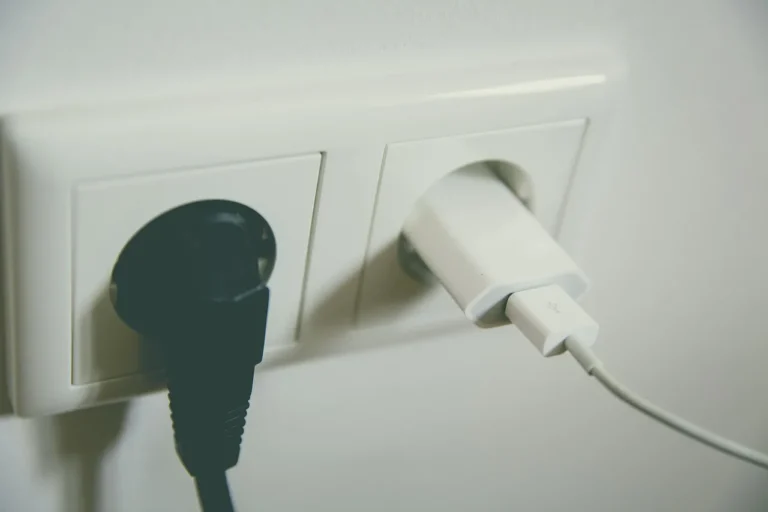
A 12V accessory socket, often called a cigarette lighter socket or power outlet, should supply vehicle battery voltage. Many vehicles keep the 12V accessory socket around 12V to 14.4V with the engine running. Some sockets are always on; others work only with the key in ACC or ON.
Test the outlet for power
Use a multimeter to check the socket directly. Place the negative probe on the outer shell and the positive probe on the center contact. If the reading is near zero, the outlet is dead or switched off by design. If the reading is low or unstable, the socket or wiring may be failing.
- Set the ignition to ACC or ON.
- Measure DC voltage at the outlet.
- Compare the reading with engine off and engine running.
- If the socket is dead, move to the fuse box next.
Look for debris or bent contacts
Coins, lint, corrosion, or a bent center contact can stop the plug from making a solid connection. The charger may still light up if it touches the socket at an angle, which makes the fault feel random. A loose fit is a strong clue that the outlet itself is worn.
Say your charger works in the morning, then stops after a rough road. That pattern can mean the socket has weak spring tension. Movement breaks contact even though the charger and cable are fine.
Could the fuse be the problem?
Yes. The accessory fuse protects the outlet circuit, and a blown fuse can kill one socket or several related ports. Check the vehicle’s accessory fuse box, which may use labels such as cig lighter, power outlet, or ACC. Replace only with the same amperage rating.
Find the correct fuse
Fuse locations vary by vehicle, and some models use more than one fuse for front and rear outlets. A circuit may only show power with the ignition on, so test under the correct key position. If the manual or fuse cover lists multiple outlet circuits, check each one.
Test the fuse correctly
Use continuity on a multimeter if the fuse is removed. A good fuse shows continuity; an open fuse does not. You can also inspect the metal strip inside a blade fuse, but continuity is more reliable. If the replacement fuse blows again, stop treating it like a routine failure.
A recurring blown fuse usually points to a short or a bad charger. Do not install a larger fuse to “solve” the problem. That can overheat the circuit and damage the socket, wiring, or adapter.
Check the charger and cable
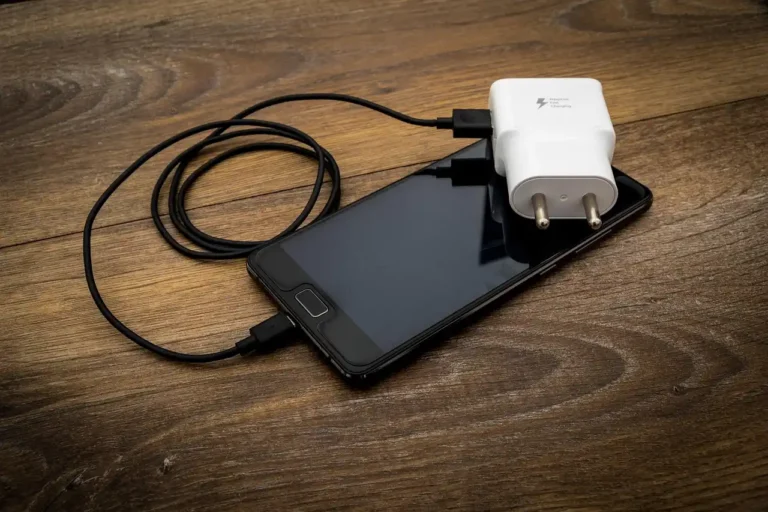
When the outlet has power but the device still does not charge, the charger or cable is the next place to look. Many plug-in car chargers contain an internal fuse, usually a small glass or blade fuse. The charger may also fail at the USB port or at the tip that plugs into the socket.
Inspect the adapter
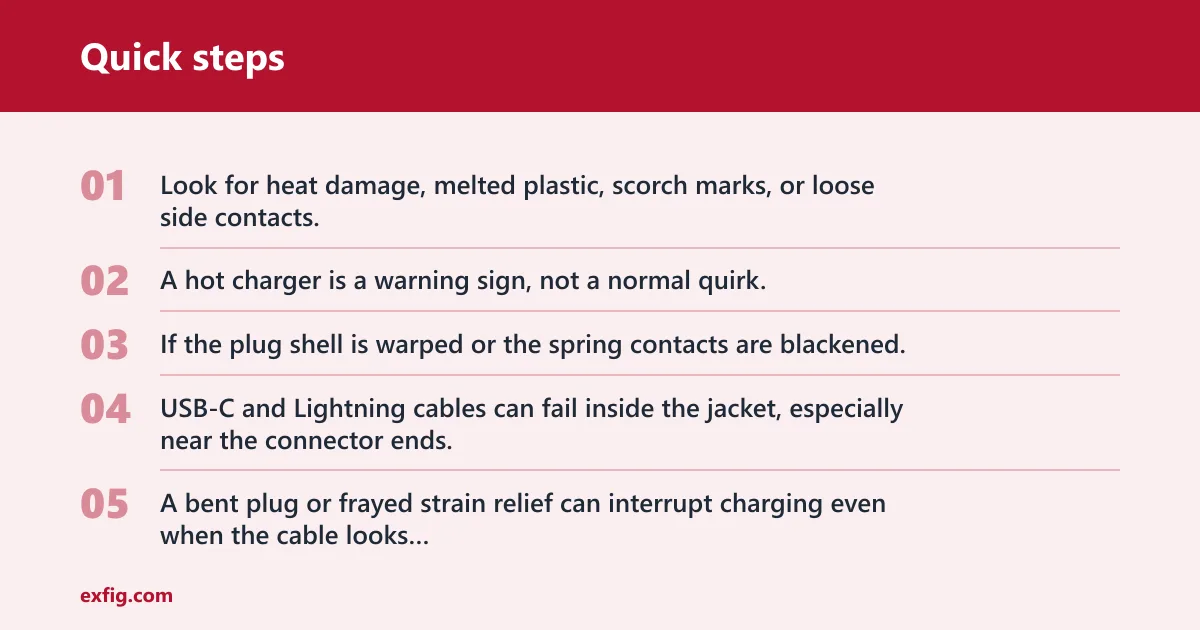
Look for heat damage, melted plastic, scorch marks, or loose side contacts. A hot charger is a warning sign, not a normal quirk. If the plug shell is warped or the spring contacts are blackened, replacement is the safer choice.
Swap the cable first
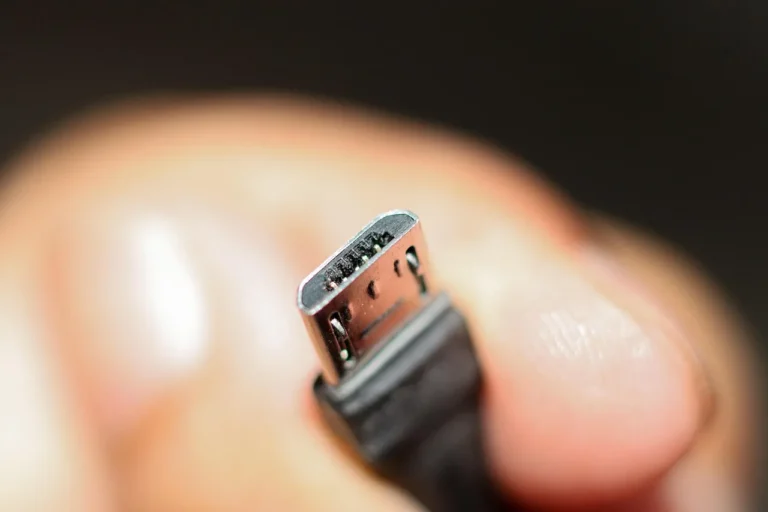
USB-C and Lightning cables can fail inside the jacket, especially near the connector ends. A bent plug or frayed strain relief can interrupt charging even when the cable looks intact. Try a known-good cable before blaming the charger body.
Match power delivery to the device
USB-C PD chargers negotiate power with the device, and output depends on the model. Some phones need 18W, 20W, or more for fast charging. A lower-output adapter may charge slowly or appear dead if the phone expects more current than the charger can supply.
A common first-timer mistake is blaming the car when a phone will only charge through a 5W USB-A adapter at a crawl. The socket can be fine, but the charger may not support the wattage the phone wants. That is a charger-spec issue, not a vehicle fault.
Why does it work sometimes?
Intermittent charging usually points to contact pressure, dirt, corrosion, or a socket that is losing retention. It can also come from vehicle behavior: some outlets switch off with the key, some delay shutoff, and some start-stop vehicles interrupt power during engine restart. That pattern matters.
Compare ignition states
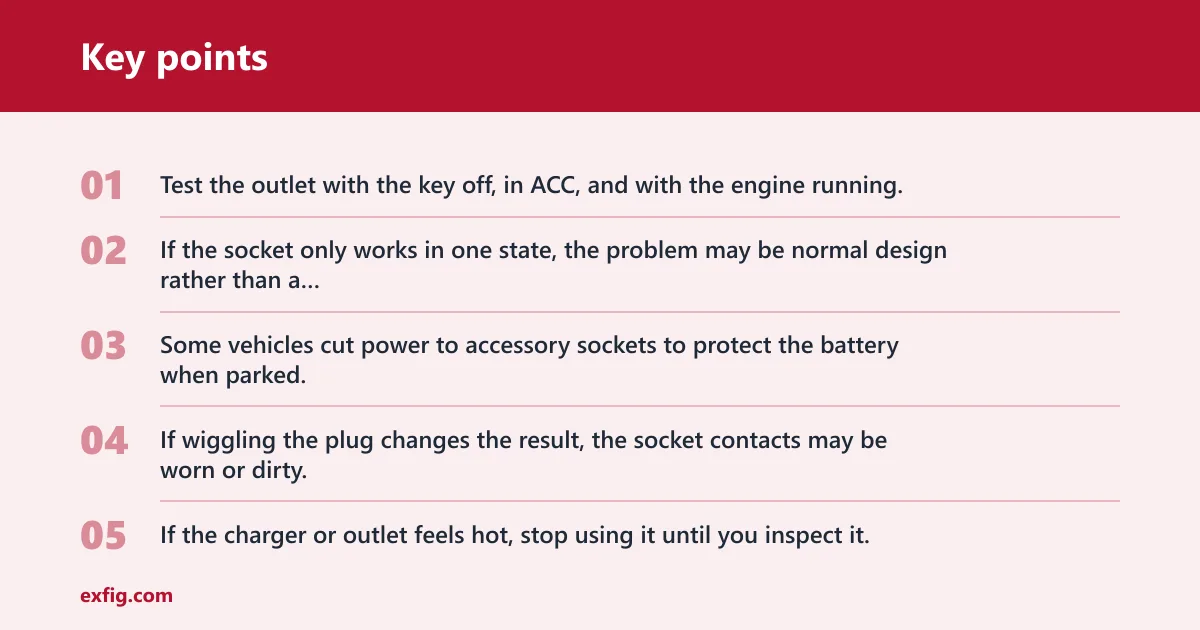
Test the outlet with the key off, in ACC, and with the engine running. If the socket only works in one state, the problem may be normal design rather than a defect. Some vehicles cut power to accessory sockets to protect the battery when parked.
Watch for movement and heat
If wiggling the plug changes the result, the socket contacts may be worn or dirty. If the charger or outlet feels hot, stop using it until you inspect it. Heat, melting, and a burnt smell are signs to replace the part instead of chasing the fault further.
When should you replace the charger?
Replace the charger when it shows visible damage, runs hot, blows fuses repeatedly, or fails in another vehicle with a known-good cable. If the internal fuse is open and the charger has already failed again after replacement, the adapter itself is likely damaged beyond a simple fix.
Replace, do not retry, when you see these signs
- Melted plastic or scorch marks on the plug
- A burnt smell from the charger or socket
- Repeated fuse failure after correct replacement
- Loose or cracked USB ports on the charger body
- No output in another vehicle with a known-good cable
Frequently asked questions
What causes car charger to stop working
Common causes include a blown fuse, a bad cable, a failed charger adapter, or poor contact at the outlet. Some vehicles also shut the socket off with the key. If the charger works sometimes, contact fit or ignition state is often the clue.
What to do if car charger isn’t working
Test the socket with another device, then try a different cable, then test the charger in another vehicle. If the outlet has no voltage, check the accessory fuse box. If the outlet has power but the phone does not charge, focus on the cable or charger.
How do I know if the fuse or the charger itself is bad?
If the socket has no voltage at all, the fuse or vehicle circuit is more likely bad. If the socket has power and the charger still fails, the adapter, cable, or internal fuse is the better suspect. A multimeter makes that split much easier to confirm.
Can a phone charging cable cause the car charger to fail?
A damaged cable can stop charging, and a shorted cable can blow an internal charger fuse or even the vehicle fuse. USB-C and Lightning cables fail inside the jacket more often than people expect. Try the cable first before replacing the charger.