What Are LED Headlights and How Do They Work?

LED headlights use light-emitting diodes with drivers, heat sinks, and optics to turn electrical current into forward light; the diode makes light through a semiconductor process. Poor beam control creates glare, shortens useful seeing distance, and can leave you with lights that look bright but work badly. This guide explains how LEDs produce light, why glare happens, and how they compare with halogen and HID headlamps.
What are LED headlights?
LED headlights are full headlamp systems built around light-emitting diodes, not a simple bulb swap. The diode is the light source, but the driver electronics, cooling hardware, reflector or projector optics, and cutoff shape the beam on the road. That chain is what makes the light useful.
Solid-state light source
LED stands for Light Emitting Diode. An LED is a semiconductor that emits light when current passes through it, and LEDs require relatively little current to illuminate. That is why they can draw less power than halogen headlamps and place less load on the vehicle electrical system.
White light output, power draw, and lifespan
LED headlamps often produce a white or whiter light than halogen. Many new cars now come with LEDs or LED DRLs. Their long life is real, but it depends on the full unit: heat control, the driver module, and the lamp assembly can fail before the LED chip itself does.
Why LED headlights are a complete lighting system
A headlamp has to do more than glow. It must receive battery power, regulate that power, generate light, and shape that light so the road is lit without flooding oncoming drivers. If any stage is wrong, the result can be a bright lamp with poor usable output.
How LED headlights work
LED headlights work by sending controlled electrical current through a semiconductor diode. The diode emits photons through electroluminescence, while the driver electronics regulate current, the heat sink pulls heat away, and the optics aim the light. The vehicle battery and alternator supply the energy that starts the process.
Electroluminescence in the diode
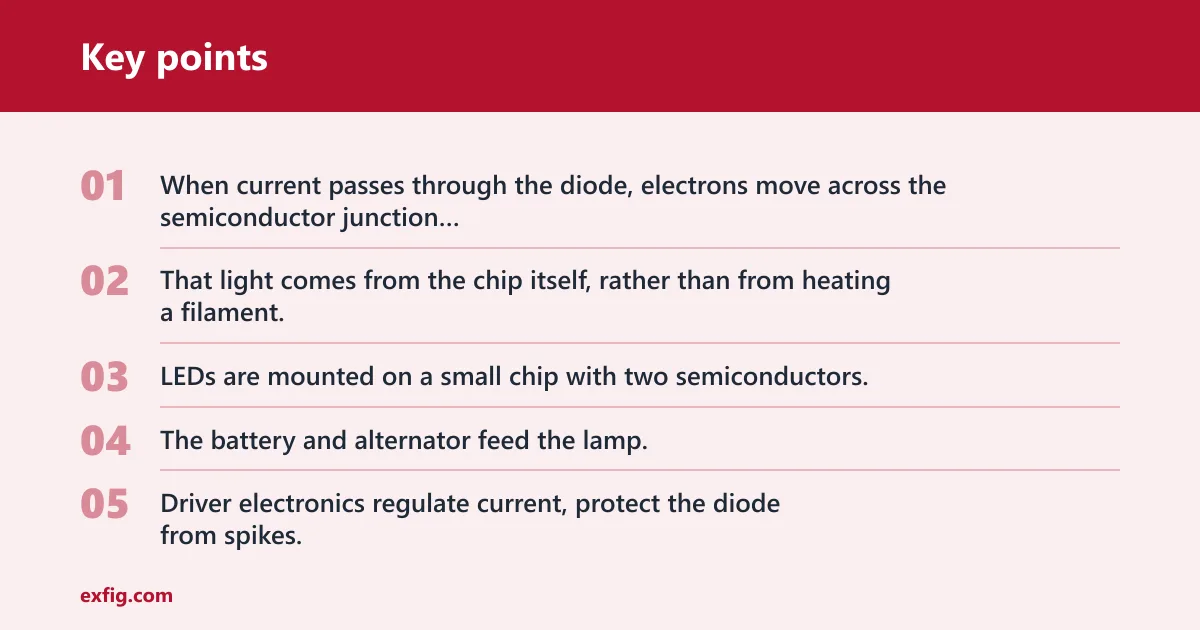
When current passes through the diode, electrons move across the semiconductor junction and release energy as photons. That light comes from the chip itself, rather than from heating a filament. LEDs are mounted on a small chip with two semiconductors, and the package is designed to manage both output and heat.
Battery power and driver electronics
The battery and alternator feed the lamp, but the LED chip cannot simply be wired like a halogen filament. Driver electronics regulate current, protect the diode from spikes, and keep output stable. Consumer Reports says LEDs use less energy than both halogen and HID lights, which matters for battery and alternator load. (Consumerreports)
Why heat control matters
LEDs run cooler at the beam face than halogens, but they still create heat at the chip and driver. If the heat sink is undersized or airflow is poor, output can drop and parts can age early. Heat management is one reason long lifespan depends on the full lamp, not only the LED itself.
LED headlight anatomy
This table breaks the system into the parts that matter most. The key point is simple: one weak link can turn a good LED into a poor headlamp.
| System part | Job | What can fail | What the driver notices |
|---|---|---|---|
| Power source | Delivers battery power through the vehicle electrical system and supports the alternator load. | Low voltage, charging fault, poor connector contact. | Dim light, flicker, slow startup, warning messages. |
| Driver/control electronics | Regulates current and protects the LED from electrical stress. | Driver module failure, water intrusion, thermal stress. | Intermittent lamp, one side out, no light at all. |
| LED emitters | Create light through electroluminescence in the semiconductor diode. | Chip degradation, solder joint failure, internal damage. | Reduced output, color shift, dead segment in the beam. |
| Heat sink | Pulls heat away from the chip and driver. | Poor thermal contact, clogged vents, fan failure where fitted. | Light output falls, housing runs hot, parts age early. |
| Reflector/projector optics | Shapes and projects the beam down the road. | Misalignment, damaged lens, incompatible retrofit bulb placement. | Scatter, dark patches, weak reach, glare for others. |
| Cutoff/beam pattern | Sets where light ends and where the road begins. | Improper aim, wrong housing, worn shield or lens. | Oncoming glare, poor seeing distance, uneven illumination. |
Why do LED headlights look brighter?
LED headlights often look brighter because they can produce a white beam with a sharper edge and a higher apparent intensity to the eye. But brightness on the road is not just lumens. Beam pattern, cutoff, and color temperature all shape what you and other drivers actually see.
Lumens versus perceived brightness
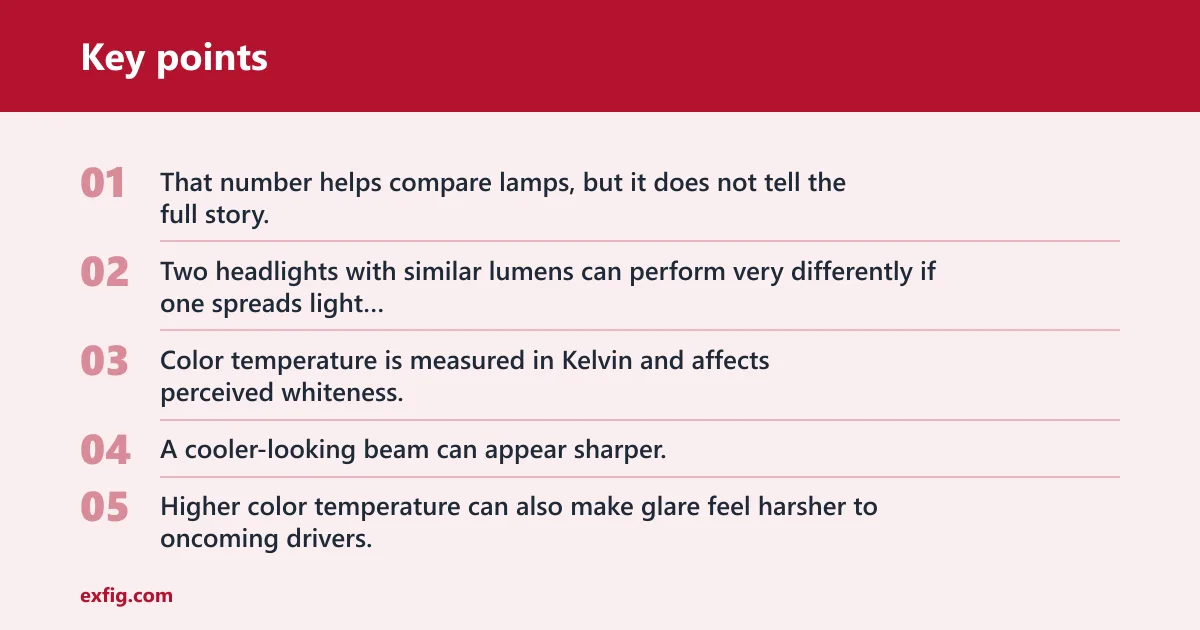
Lumens measure total light output. That number helps compare lamps, but it does not tell the full story. Two headlights with similar lumens can perform very differently if one spreads light poorly and the other puts more of it where the road needs it.
Color temperature in Kelvin
Color temperature is measured in Kelvin and affects perceived whiteness. A cooler-looking beam can appear sharper, but it does not automatically mean more usable light. Higher color temperature can also make glare feel harsher to oncoming drivers, especially when the beam pattern is too open.
Beam pattern and glare to oncoming drivers
Suppose two cars each have a lamp with strong total output. The one with a clean cutoff and correct aim gives the driver a long, useful road stripe. The one with a scattered beam may seem blinding to traffic ahead while wasting light into trees, signs, and mirrors.
How do LED headlights compare with halogen and HID?
LED, halogen, and HID headlamps use different light sources and different amounts of electrical power. Halogen uses a tungsten filament, HID uses xenon gas and an electrical arc, and LED uses a semiconductor diode. They also differ in heat loss, beam control, and replacement cost.
Halogen headlights
Halogen headlights use a tungsten filament and waste more energy as heat. Family Handyman says halogens typically draw 55 to 65 watts per bulb. They usually produce a yellower light and less efficient output than LED systems, though their hardware is simpler and the bulb itself is often cheaper.
HID headlights
HID headlights use xenon gas and an electrical arc to create light. They often produce whiter light than halogen and helped bridge the move from filament lamps to LED systems. Consumer Reports places LEDs above both halogen and HID on energy use, which is one reason newer cars moved in that direction.
Where LED headlights sit on efficiency and output
The same source says LEDs typically draw 15 to 30 watts per headlight module. That lower draw can reduce battery and alternator load, which matters when the car has many electrical consumers. The tradeoff is that a failed LED headlamp often means replacing a module or assembly instead of a cheap bulb.
Are LED headlights legal?
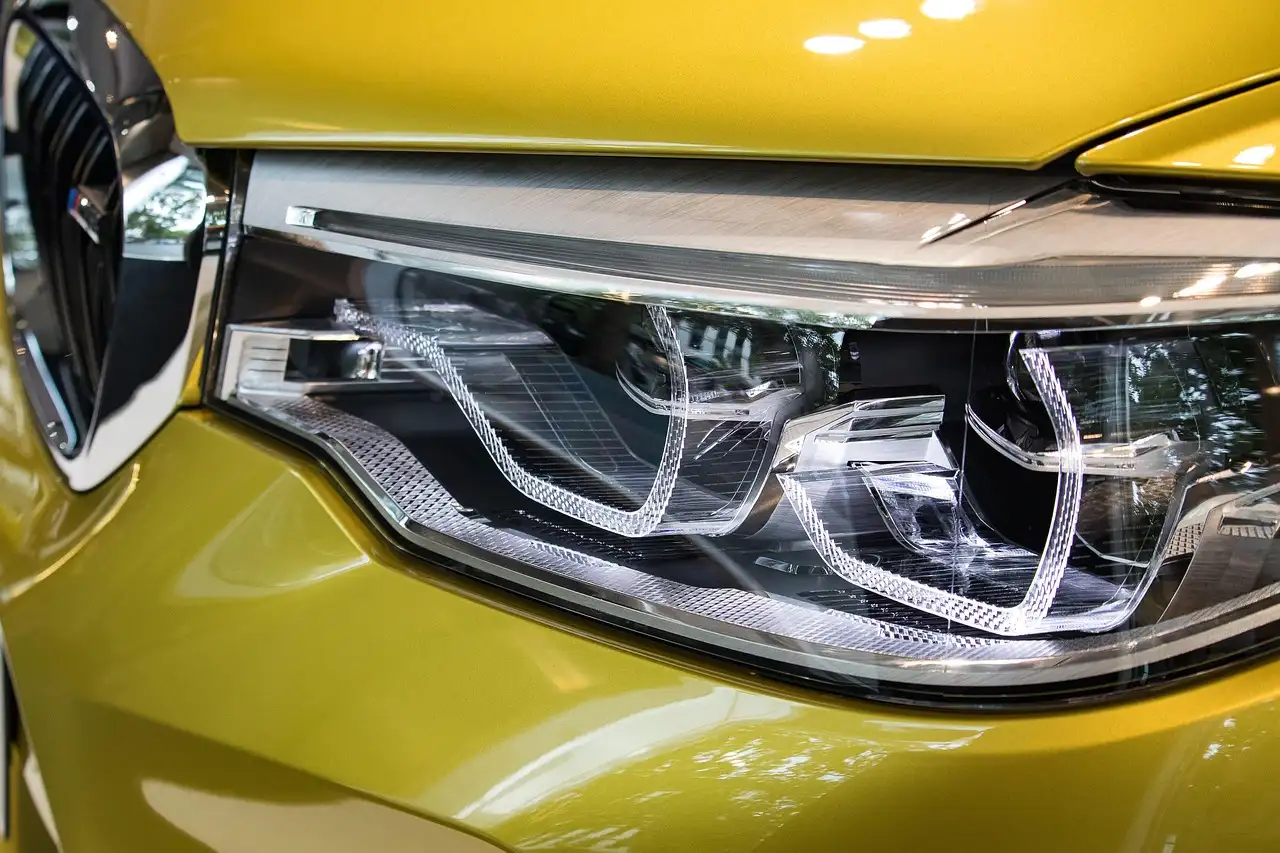
LED headlights can be legal, but legality depends on the entire headlamp assembly, not the word LED on the box. A compliant lamp has the right optics, cutoff, brightness, and beam aim for the market where it is sold. A retrofit bulb in a housing not designed for it is a common problem.
Factory LED systems versus retrofit bulbs
A factory LED headlamp is engineered as one system. An LED retrofit bulb drops a different light source into a housing meant for halogen, and that often changes the beam shape. The result can be more glare and weaker pattern control, even if the bulb itself is bright.
Matrix LED headlights
Matrix LED headlights use sensors and cameras to scan the road ahead. They can illuminate, dim, or switch off individual LEDs so the driver keeps distance lighting while shielding other road users. That is a stronger control system than a fixed beam, and it depends on software, optics, and hardware working together.
How are LED headlights legal?
They are legal when the complete headlamp meets local rules for beam pattern, cutoff, output, and installation. A lamp that is bright on paper can still be noncompliant if it throws light where it should not. Legal status is about the system on the car, not the packaging label alone.
LED daytime running lights versus full headlights
LED daytime running lights are not the same as full LED headlights. DRLs are meant to make the car easier to see in daylight, and they do not contain dipped and high beams. Full headlights are the lamps that must provide controlled road illumination after dark.
- Check whether the lamp is a DRL, a low beam, or a full headlamp unit.
- Look at the housing design and cutoff, not only the bulb type.
- Confirm whether the car uses reflector optics, projector optics, or matrix control.
- Match the replacement part to the exact headlamp assembly.
- Verify local compliance before fitting a retrofit bulb or kit.
Frequently asked questions
What are LED headlights and how do they work?
LED headlights are solid-state headlamps that typically use a semiconductor diode, a driver, cooling hardware, and optics. Current through the diode creates light by electroluminescence, then the reflector or projector aims that light and the cutoff limits glare. The whole system matters, not only the chip.
Are LED headlights brighter than halogen bulbs?
They often appear brighter because they can produce whiter light and better beam control, but total brightness depends on lumens, optics, and cutoff. A poorly aimed LED can look intense without lighting the road well. A well-designed halogen can still outperform a bad LED retrofit in real use.
Do LED headlights use less power than halogen bulbs?
Yes. LEDs require relatively little current to illuminate, and Family Handyman says they typically draw 15 to 30 watts per headlight module versus 55 to 65 watts per halogen bulb. That lower draw reduces electrical load, which is one reason LEDs fit modern vehicles so well.
How long do LED headlights last?
They usually last longer than halogen bulbs, but lifespan depends on heat control, driver electronics, and the lamp assembly. The LED chip may stay healthy while a module, connector, or cooling part fails first. That is why a long service life does not always mean a cheap repair.
Why are LED headlights so bright to oncoming drivers?
Glare often comes from beam pattern, not only total output. If the cutoff is wrong, the lamp is aimed too high, or the retrofit does not match the housing, light spills into the eyes of other drivers. Color temperature can make that glare feel harsher even when lumen numbers are similar.
What is the difference between LED headlights and LED daytime running lights?
LED daytime running lights are daytime visibility lamps, not full road-lighting systems. They do not include dipped and high beams. LED headlights are designed to light the road at night and must use optics and cutoff to control glare much more carefully.