How to Remove a Dashboard Phone Mount Without Leaving Residue

Remove the mount first, then match the residue. Rubbery adhesive rolls off with thumb pressure or a plastic card, while sticky film needs isopropyl alcohol on a microfiber cloth. Bad removal can gouge soft trim, cloud glossy plastics, or smear adhesive into a wider patch. This guide shows how to identify the residue, lift the mount safely, and clean dashboard materials without leaving marks.
This guide is part of our Dashboard phone mounts: how to choose the right one series.
What you’ll need
- Household hair dryer
- Waxed dental floss
- 10-lb to 20-lb monofilament fishing line
- Plastic automotive trim tool, plastic razor scraper, or old credit card
- Microfiber cloths
- Isopropyl alcohol
- Goo Gone Automotive Spray Gel
- 3M General Purpose Adhesive Cleaner
- Meguiar’s Quik Interior Detailer
- Gloves for solvent handling
Which residue are you dealing with?
The first job is to identify the residue, because foam tape, sticky transfer film, and hardened acrylic adhesive need different tools. Acrylic foam tape can bond into the dash texture and may get harder to remove after heat and time, so the safest approach can vary with both the residue and the dashboard material.
Say your phone mount leaves a gray, rubbery pad that peels in chunks. That is usually foam tape. Suppose the base leaves a shiny, slippery smear that wipes around before it lifts. That is closer to sticky transfer residue. If the leftover patch feels stiff, bonded, and almost lacquer-like, treat it as cured acrylic adhesive.
Foam tape and adhesive pads
Foam tape often comes off with warming and a sawing motion, not force. It is common on suction-disk adhesive pads and adhesive ball bases, which can leave a thicker pad than a thin film.
Sticky film and transfer residue
Sticky film is thin and tacky. It usually responds to a mild cleaner and light rubbing with a microfiber cloth, then a final interior detailer wipe.
Hardened acrylic adhesive
Hardened acrylic adhesive is the toughest case. It often stays behind after years of hot-cabin exposure and may need a solvent made for durable hard surfaces, plus careful lifting with a plastic tool.
Dashboard residue matrix
Use this matrix before you choose a cleaner. It matches the residue to the dash surface so you do not trade adhesive for lifted vinyl, dull spots, or a soft-touch patch that changes sheen.
| Residue type | ABS plastic | Vacuum-formed vinyl skin | Leather wrap | Rubberized soft-touch coating |
|---|---|---|---|---|
| Foam tape | Plastic trim tool, warm with hair dryer, then Goo Gone Automotive Spray Gel | Waxed dental floss, then gentle cleaner only; watch for lifting edges | Plastic card only for lifting; use a leather-safe cleaner, not citrus gel | Warm lightly, use floss or line, then a mild interior cleaner; low risk only if pressure stays light |
| Sticky film | Microfiber with Goo Gone Automotive Spray Gel, then interior detailer | Goo Gone Automotive Spray Gel used sparingly, then wipe dry | Use leather-safe cleaner; avoid Goo Gone Automotive Spray Gel | Use a barely damp microfiber with a mild interior cleaner; avoid soaking |
| Hardened acrylic adhesive | 3M General Purpose Adhesive Cleaner on durable hard surfaces, then detailer | Very cautious solvent use only if the vinyl is firmly bonded | Do not use aggressive solvent; use a leather-safe cleaner and a plastic tool only | High risk; test first and limit to minimal solvent on a cloth |
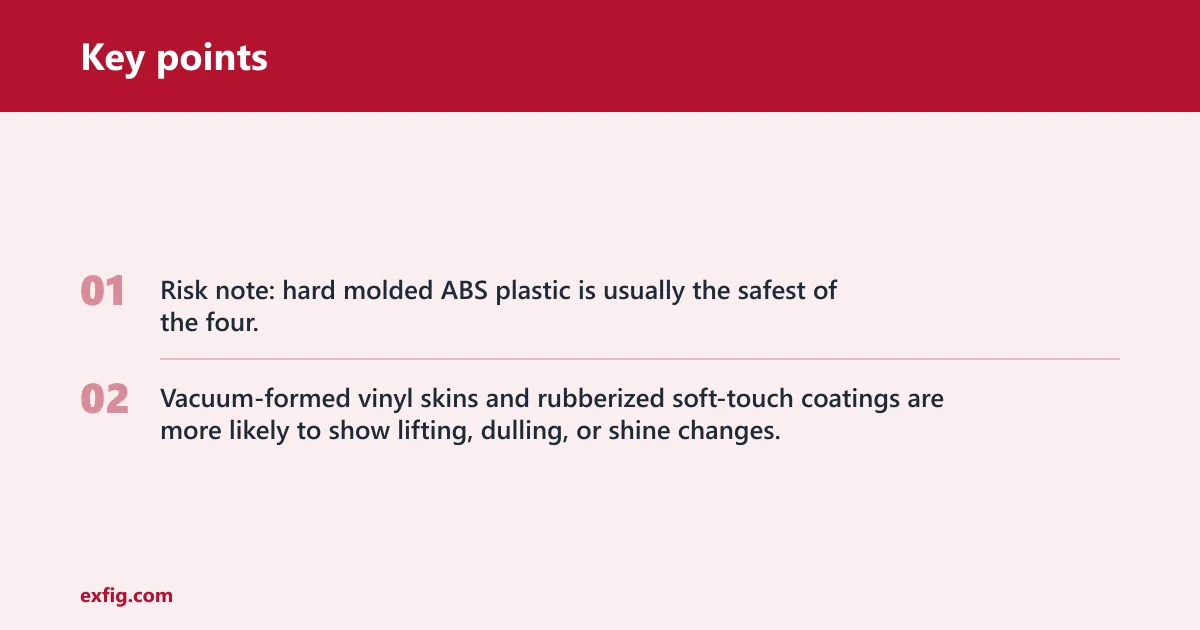
Risk note: hard molded ABS plastic is usually the safest of the four. Vacuum-formed vinyl skins and rubberized soft-touch coatings are more likely to show lifting, dulling, or shine changes. Leather wraps need the most restraint.
How do you remove the mount base?
Warm the base, cut the bond, then lift it without prying up the dash surface. A hair dryer is preferred over a heat gun here, and the goal is to soften the adhesive, not cook the trim.
-
Warm the pad. Hold the hair dryer about 3 to 4 inches away on low or medium heat for about 30 to 60 seconds. Move it in small passes so the adhesive softens evenly instead of overheating one spot.
-
Saw through the bond. Slide waxed dental floss or about 10-lb to 20-lb monofilament fishing line behind the base and work it side to side. That cuts through foam adhesive more cleanly than pulling straight off.
-
Lift the edge. Use a plastic automotive trim tool, plastic razor scraper, or old credit card to raise the edge only after the bond starts to release. Do not pry with metal, because metal tools can gouge trim or cut soft-touch coating.
If the mount is still stuck hard, stop and rewarm for another 30 seconds instead of forcing it. Years in a hot cabin can let acrylic foam tape bond into dash texture, so a second warm-and-saw pass often works better than brute force.
What should you use on your dash?
Choose the cleaner by material, not by habit. One cleaner is intended for hard plastic and vinyl dash trim, while another is commonly used on durable hard surfaces with stubborn cured residue. Meguiar’s Quik Interior Detailer is the finishing product for plastic, vinyl, and screens.
Hard plastic and vinyl trim
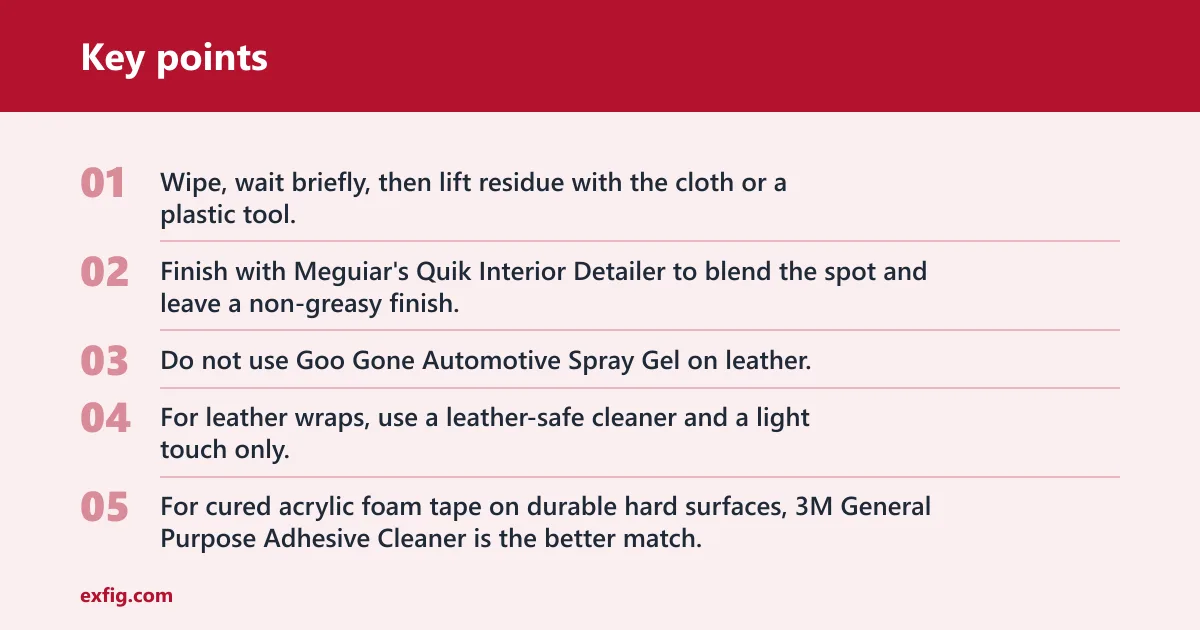
For ABS plastic and vinyl, spray a little Goo Gone Automotive Spray Gel onto a microfiber cloth, not directly onto the dash. Wipe, wait briefly, then lift residue with the cloth or a plastic tool. Finish with Meguiar’s Quik Interior Detailer to blend the spot and leave a non-greasy finish.
Leather and soft-touch coatings
Do not use Goo Gone Automotive Spray Gel on leather. For leather wraps, use a leather-safe cleaner and a light touch only. On soft-touch coatings, test a hidden edge first, because aggressive rubbing can leave a glossy patch even after the adhesive is gone.
Stubborn cured adhesive on durable surfaces
For cured acrylic foam tape on durable hard surfaces, 3M General Purpose Adhesive Cleaner is the better match. Apply it to a cloth, let it dwell briefly, then wipe and repeat as needed. Keep it off leather and be careful on soft-touch trim, where solvent can change the finish.
Common first-timer mistake: a too-wet towel. Suppose the residue is a 2-inch patch on vinyl and the first wipe just smears it wider. Use less liquid, switch to a clean cloth face, and work from the outside edge inward so the adhesive does not spread into the texture.
Common mistakes
Most damage comes from heat, force, or the wrong cleaner. Thin residue on hard plastic is forgiving; soft-touch coating and leather are not. If the surface starts to look shiny, stop and switch to a milder cleaner or a cleaner cloth.
- Do not yank the mount straight off.
- Do not use a heat gun when a hair dryer will do.
- Do not scrape with a blade or metal putty tool.
- Do not use Goo Gone Automotive Spray Gel on leather.
- Do not flood soft-touch trim with solvent.
- Do not keep rubbing one spot after the residue is gone, or you can polish the finish into a shiny patch.
If that didn’t work, try this next
When the first pass leaves residue behind, escalate in this order: rewarm, recut, then spot-clean with the right solvent. That sequence limits surface damage and keeps you from smearing adhesive deeper into the texture.
-
Rewarm the base. Return the hair dryer to low or medium heat for another 30 seconds at 3 to 4 inches away. This helps if the adhesive cooled while you worked on the first edge.
-
Recut the thick spot. Thread fresh floss or line through the stubborn section and work around the perimeter. Fresh line cuts cleaner when old adhesive starts to clog the strand.
-
Switch cleaners carefully. Move from Goo Gone Automotive Spray Gel to 3M General Purpose Adhesive Cleaner only on durable hard surfaces with cured residue. If the dash is leather or soft-touch, stop at a leather-safe cleaner and accept that repeated light passes may be safer than one aggressive one.
How do you get foam tape residue off a dash?
Foam tape residue usually comes off best after warming and sawing, because the foam lifts before the adhesive fully smears. Once the bulk is gone, use the right cleaner for the dash material and finish with a dry microfiber wipe so the spot blends back into the panel.
For hard molded ABS plastic, a plastic card can help roll the last bits into a clump. On vinyl, keep pressure light and work slowly along the residue line. If the pad leaves a lifted edge, flatten it with the cloth rather than peeling harder.
Frequently asked questions
How do I remove a dashboard phone mount without leaving residue?
Warm the mount with a hair dryer on low or medium for 30 to 60 seconds, cut through the bond with waxed dental floss or 10-lb to 20-lb fishing line, then clean the leftover film with the right product for the surface. Finish with Meguiar’s Quik Interior Detailer on plastic, vinyl, or screens.
What removes adhesive residue from a car dashboard safely?
For hard plastic and vinyl, Goo Gone Automotive Spray Gel is the safer first choice. For stubborn cured adhesive on durable hard surfaces, 3M General Purpose Adhesive Cleaner is the stronger option. Leather and soft-touch coatings need a milder, surface-specific cleaner and a much lighter touch.
Can I use Goo Gone on a car dashboard?
Yes, but only on hard plastic and vinyl dash trim. It is not for leather, and it should be used sparingly on soft-touch surfaces because any solvent can change the sheen. Put it on a cloth first, then wipe and follow with a clean interior detailer.
Will a hair dryer damage my dashboard when removing a phone mount?
Used correctly, a hair dryer is the safer heat source. Keep it 3 to 4 inches away, use low or medium heat, and stop after 30 to 60 seconds. That warms the adhesive without the concentrated heat that can warp trim or mark a soft-touch finish.
What should I use instead of metal tools on a car dashboard?
Use a plastic automotive trim tool, plastic razor scraper, or old credit card. Those tools can lift residue and edges without the gouging risk that comes with metal blades. They are especially important on vinyl skins, leather wraps, and soft-touch coatings.
What if the dash mount is stuck really hard?
Assume the adhesive has aged and bonded into the texture. Rewarm the pad, cut again with floss or fishing line, and move to 3M General Purpose Adhesive Cleaner only if the surface is a durable hard one. If the trim is leather or soft-touch, slow down and use surface-safe cleaning instead of more force.
How do I remove a sticky mounting pad from vinyl trim?
Warm the pad, work floss under the edge, and lift only after the bond softens. Then use Goo Gone Automotive Spray Gel on a microfiber cloth if the vinyl is intact and firmly attached. Watch for lifted edges, because once vinyl starts to separate, more solvent can make the damage worse.