Vent Phone Mount with Charger vs Standard Mount

A charging vent mount is usually worth the cost only if you regularly need top-ups on the road; otherwise a standard mount is often the better buy. Skip that choice, and you may pay more, put more stress on the vent, and still deal with cable clutter or possible heat-related charging slowdowns. Here’s how the two compare on cost, heat, mounting strain, charging speed, and which setup fits daily driving, rideshare work, long trips, and MagSafe or Qi phones.
Key differences by use case
| Buyer factor | Vent phone mount with charger | standard mount | Winner | Best fit |
|---|---|---|---|---|
| Upfront cost | Higher. You pay for the mount plus the charging hardware and usually a cable or adapter. | Lower. Mechanical or magnetic mounting is usually all you need. | standard mount | Short commutes, low-budget setups |
| Charging convenience | High. Keeps the phone topped up without plugging in each trip. | None. You must use a separate cable or charge elsewhere. | Vent phone mount with charger | Navigation-heavy driving, rideshare work, long trips |
| Heat risk | Higher. Wireless charging adds heat, and HVAC air can add more in winter or summer. | Lower. No built-in charging coil to add heat. | standard mount | Hot cabins, long phone sessions |
| Vent stress | Higher. Charging hardware adds weight and can pull on weak slats. | Lower. Less mass on the vent clip. | standard mount | Vehicles with thin or loose vent slats |
| Case compatibility | Mixed. Works best with thin cases, MagSafe rings, or clean Qi alignment. | Usually easier. Magnetic or clamp-only mounts are less picky. | standard mount | Thick protective cases, metal plates |
| Cable clutter | Lower at the phone. Still needs power from a USB-C car source, so cable routing remains. | Higher. The phone usually needs a separate charging cable if you want power. | Vent phone mount with charger | Clean cabin layout, frequent mount-and-go use |
| Long-trip usefulness | High. Useful when navigation, music, and screen time drain the battery. | Moderate. Fine for holding the phone, but you need another charging plan. | Vent phone mount with charger | Road trips, rideshare shifts |
| Simple setup | More parts, more setup, more failure points. | Simpler. Clip it on and go. | standard mount | Drivers who want the fewest moving parts |
What each mount type does
Both mounts keep the phone in view for maps, calls, and media, without taking your hands off the wheel. The difference is power delivery: the charging version adds a Qi wireless charging pad or MagSafe-compatible magnet array, while the standard mount only secures the phone.
That extra charging gear can change the setup. It adds weight, can add heat, and needs a USB-C car power source or a 12V adapter to work as intended.
Upfront cost versus total setup cost
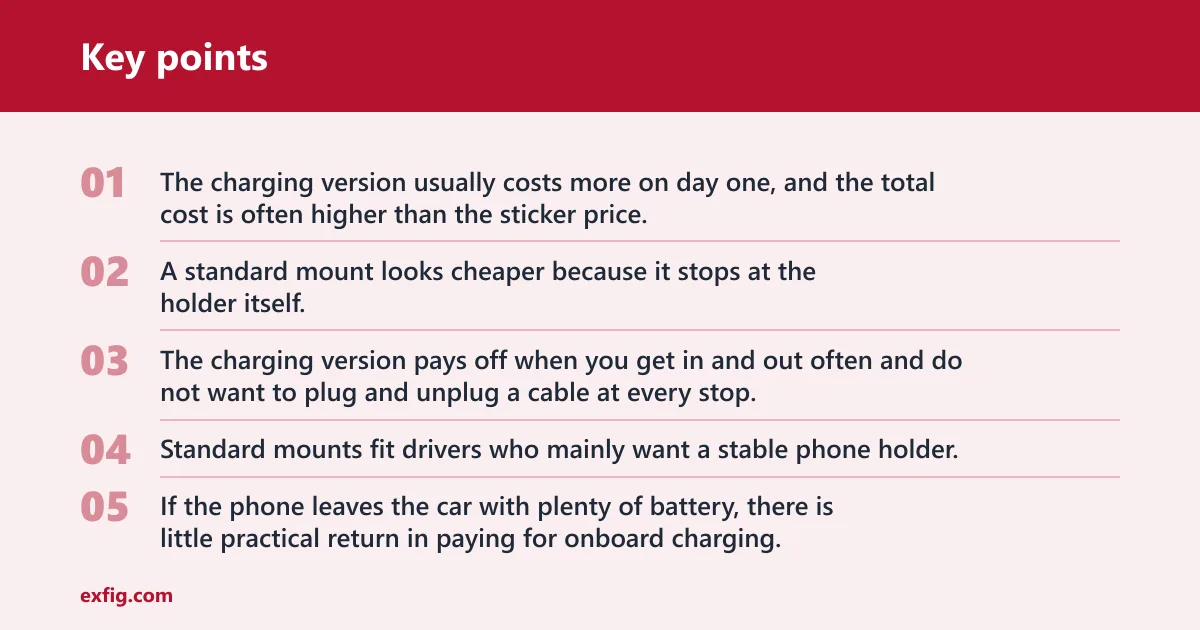
The charging version usually costs more on day one, and the total cost is often higher than the sticker price. You may also need a quality cable, a USB-C adapter, or a car with enough power output to keep charging speed from dropping.
A standard mount looks cheaper because it stops at the holder itself. If you already have built-in USB-C, a wireless charging pad, or another car charger, paying extra for charging in the vent mount can be redundant.
Charging convenience versus non-charging simplicity
The charging version pays off when you get in and out often and do not want to plug and unplug a cable at every stop. That matters most in rideshare work, all-day navigation, or trips where the phone is the route display, music player, and payment terminal.
Standard mounts fit drivers who mainly want a stable phone holder. If the phone leaves the car with plenty of battery, there is little practical return in paying for onboard charging.
Vent mount decision matrix
The table below turns the choice into a practical rule set. A charging mount wins when convenience, battery recovery, and cable cleanup matter more than cost, heat, and vent load.
| Scenario | Vent phone mount with charger | standard mount | Recommendation |
|---|---|---|---|
| Short commute | Usually unnecessary unless the phone starts low and you keep the screen on the whole drive. | Usually enough. Hold the phone and charge it elsewhere. | standard mount |
| Rideshare driving | Useful. Frequent app use and long on-screen time make top-ups valuable. | Works, but you may need a separate cable and more cabin clutter. | Vent phone mount with charger |
| Road trip | Useful if the phone handles navigation, playlists, and hotspot duty for hours. | Fine only if another charging source is already in place. | Vent phone mount with charger |
| iPhone MagSafe user | Strong fit when alignment is clean and the case is MagSafe-ready. | Works, but offers no magnetic charging alignment benefit. | Vent phone mount with charger |
Is the charging version worth the extra cost?
It is worth the extra cost only when the mount replaces another charging habit you would otherwise repeat on every drive. If the phone already arrives near full and you drive mostly short hops, the added cost buys convenience, not much more.
When onboard charging saves enough hassle
Onboard charging starts to make sense when the phone is a work tool, not just a map. A common first-timer mistake is paying for charging hardware, then using it on a five-minute commute where the battery barely moves.
It also matters if your car lacks a good cable path or the charging port sits awkwardly far from the dash. In that case, a mount with power built in can reduce cable routing without forcing the phone onto a dangling lead.
Will a charging vent mount overheat or stress your vents?
Yes, it can do both more than a standard mount. Wireless charging makes heat, and the vent can add either warm air in winter or cold air in summer, while the extra hardware adds weight to the clip and slats.
Heat from HVAC vents in winter and summer
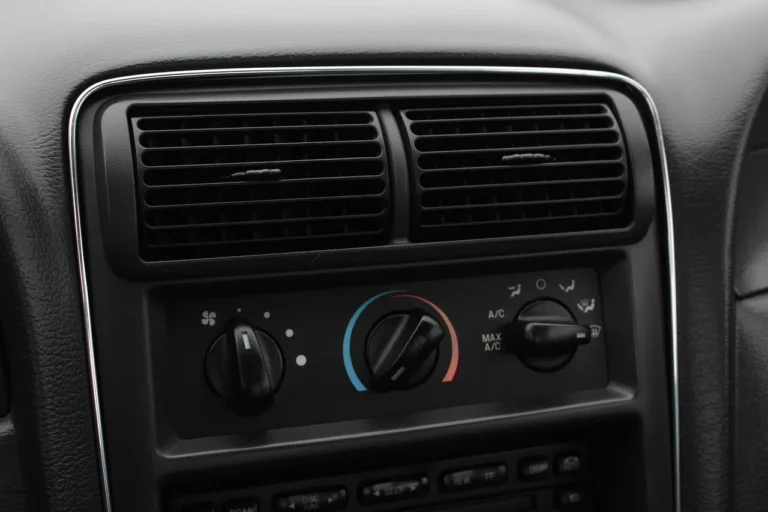
Car HVAC vents come in horizontal, vertical, and round shapes, and the air they move can change phone temperature in either direction. Winter heat can push the phone warmer than intended, while summer cold air can help a little, but it does not erase charging heat.
Qi wireless charging depends on alignment and power transfer, so heat can rise if the phone is slightly off-center or if the case adds resistance. That is one reason manufacturers often warn that charging speed and thermal behavior depend on the phone, the charger, and the power source.
Added weight on vent slats and clip styles
Charging mounts usually weigh more because of the coil, magnet assembly, and extra structure. That matters on weak vent slats, especially on spring clamps or rotating arms that hang farther from the vent face.
Hook-style clips with rubberized contact points usually spread the load better than a bare spring clamp, but no clip can fix brittle slats. If the vent flexes when you tap the mount, choose a lighter standard mount or move to a dash or windshield option.
How do stability and case fit compare?
Stability depends on the vent design, the clip mechanism, and the phone’s weight. A charging model can stay secure, but the extra mass makes fit more sensitive on rough roads and on vents that are already loose.
- Check the vent shape. Horizontal slats usually give the best grip, while vertical and round vents can leave less surface for a clip to hold. If the mount only grabs one thin slat, expect more wobble.
- Test the clip style. Hook-style clips, spring clamps, and rotating arms all load the vent differently. Rubberized contact points help, but the clip should not twist the vent when you install it.
- Match the case to the charger. Thick protective cases can weaken Qi transfer and break MagSafe alignment. If the phone needs a magnetic ring or a bare-back fit, a bulky case may force you to remove the case or switch mounts.
- Look for metal and plate conflicts. Metal plates and some built-in kickstands can block wireless charging or interfere with magnetic hold. If the phone already carries a plate for an old magnetic holder, a charging mount may charge poorly or not at all.
Say your phone has a thick protective case and a metal plate glued inside it. A standard magnetic vent mount may still hold the phone, but a charging vent mount can lose alignment and slow charging enough that the extra hardware no longer pays off.
Suppose the same phone uses a thin MagSafe-ready case instead. The charging version is much more likely to stay aligned, which makes the price easier to justify for long trips and navigation-heavy days.
Is MagSafe or Qi charging worth it in the car?
It is worth it when your phone and case line up cleanly with the mount and you want one-hand placement without cable fuss. MagSafe makes that easier on supported iPhones, while Qi is the wider wireless standard for many Android phones and some iPhone accessories.
MagSafe alignment for iPhone users
MagSafe gives iPhone users a stronger magnetic alignment system, so the phone is less likely to sit off-center. That usually improves charging consistency in a car vent mount, especially over bumps and in stop-and-go traffic.
It is not magic. A thick case, a loose vent, or a poor-quality magnet ring can still reduce charging speed or make the phone shift under vibration.
Qi charging limits, cable routing, and power source needs
Qi wireless charging works across many phones, but speed depends on both the charger and the device. A car’s USB-C port, 12V socket adapter, or built-in power source may limit output, so a charging mount is only as good as the power feeding it.
If the car already has built-in USB-C or a wireless charging pad, a charging vent mount may duplicate a function you already own. In that case, the standard mount often gives the cleaner value.
Choose Vent phone mount with charger if… / Choose standard mount if…
Choose the charging version when the phone spends long stretches on maps, battery drain is real, and you want one device that both holds and tops up the phone. Choose the standard mount when you mainly need a holder, want the lowest cost, or know your vent slats and phone case are a poor fit for extra weight and wireless charging limits.
- Choose Vent phone mount with charger if… you drive for work, take long trips, or keep screen-on navigation running for more than a short commute.
- Choose Vent phone mount with charger if… you use an iPhone with MagSafe or a thin Qi-friendly case and want easier alignment.
- Choose standard mount if… your drives are short, your phone stays charged elsewhere, or you already have USB-C charging in the car.
- Choose standard mount if… your vents are fragile, your case is thick, or you do not want extra heat and extra parts on the vent.
Frequently asked questions
Is a vent phone mount with charger better than a standard vent mount?
It is better only when charging convenience matters enough to justify the extra cost, weight, and heat. For drivers who need power on the road, it can be the right call. For short trips or phones that already charge elsewhere, a standard mount is usually enough.
Will a charging vent mount overheat my phone?
It can, especially if the cabin is hot and the phone is wirelessly charging at the same time. Winter heat through the vent can also warm the phone more than expected. Thick cases and poor alignment make the problem worse because they slow heat transfer and charging efficiency.
Do vent mounts with wireless charging stay stable on rough roads?
They can, but the extra mass makes the mount more sensitive to vent quality and clip design. Hook-style clips and rubberized contact points help, while weak slats and loose round vents are more likely to wobble. A lighter standard mount is less demanding on the vent.
Is MagSafe charging strong enough in a car vent mount?
Yes, for many iPhone users, if the case is MagSafe-compatible and the mount aligns well. The magnetic system helps keep the phone centered, which supports steadier charging. Thick cases, off-center placement, or poor magnet rings can still reduce performance.
What happens if my car vents blow hot air in winter?
The phone can run warmer, and that extra heat stacks on top of wireless charging heat. That is the season when charging mounts can make the most thermal sense to avoid. If the vent is set to strong heat, a standard mount or a different mounting location may be the safer choice.
Can I use a thick case with a charging vent mount?
Sometimes, but thick protective cases often reduce wireless charging efficiency and can weaken MagSafe alignment. If the case is very bulky or has a metal plate, the mount may charge slowly or not at all. A standard mount is less picky about case thickness.