
Are Magnetic Phone Holders Bad for Your Phone?

Magnetic phone holders are generally considered safe for iPhones and Android phones when they are made for phones and do not interfere with wireless charging or NFC. Avoid weak, off-center mounts and any setup that causes heat buildup or signal trouble. Bad placement can make charging fail, maps lag, or accessories miss taps, which is more annoying than damaging. This guide separates real risk from temporary interference and gives a simple rule for choosing a safe magnetic holder.
What magnets can and can’t affect
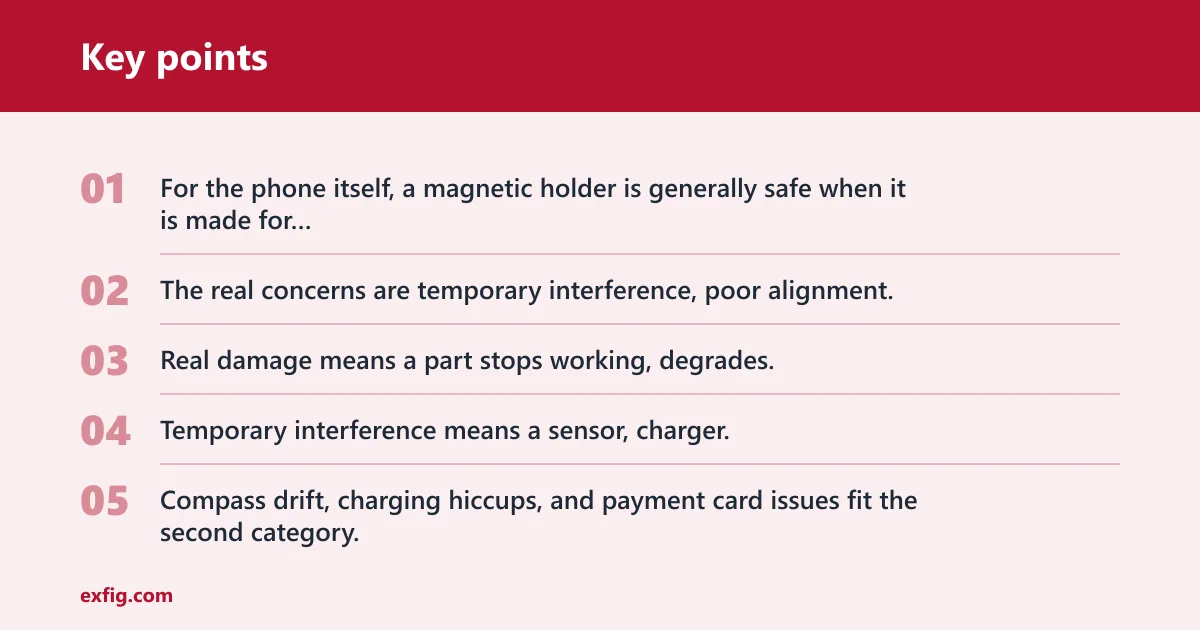
Usually no. For the phone itself, a magnetic holder is generally safe when it is made for smartphones and used with a compatible case or mount. The real concerns are temporary interference, poor alignment, and nearby items such as cards or medical devices, not ordinary damage to the screen, battery, or storage.
What counts as real damage versus temporary interference
Real damage means a part stops working, degrades, or shows a lasting fault after the magnet is removed. Temporary interference means a sensor, charger, or accessory behaves oddly while the phone is near the magnet, then returns to normal when the phone is moved away. Compass drift, charging hiccups, and payment card issues fit the second category.
What magnets can affect
Compass sensors are a commonly reported phone-side issue. A strong magnetic holder can temporarily throw off map direction, especially on phones that rely on the compass for navigation and AR features. Wireless charging can also slow down or fail if the coil is not lined up well with the mount or case.
Credit cards, hotel keys, transit cards, and any other magnetic-strip item are a different problem. Those items can be damaged or demagnetized by contact with strong magnets or by being stored too close to a magnetic mount. Keep them in a separate pocket or slot.
What magnets usually do not affect
Modern smartphone screens are not harmed by magnets in normal holder use. Phone displays use electrical signals to form the image, so a magnet does not erase or burn in the panel. Touch complaints are usually about case fit, dirt, or a misaligned accessory, not magnetic damage to the screen.
Smartphone memory is also not a typical concern. Android and Apple iPhone devices use NAND flash memory, and that storage has no moving mechanical parts for a magnet to disturb. Lithium-ion batteries in modern iPhone models are likewise not the kind of magnetic target people often fear.
Can a magnetic case or mount cause issues?
Yes, but the issue is usually the case, ring, or plate rather than the phone body itself. A magnetic case can change how the phone sits on a holder, how the charging coil lines up, and how accessories attach. Speaker complaints are common among buyers, but most are about placement, not permanent harm.
How the case, ring, or plate changes behavior
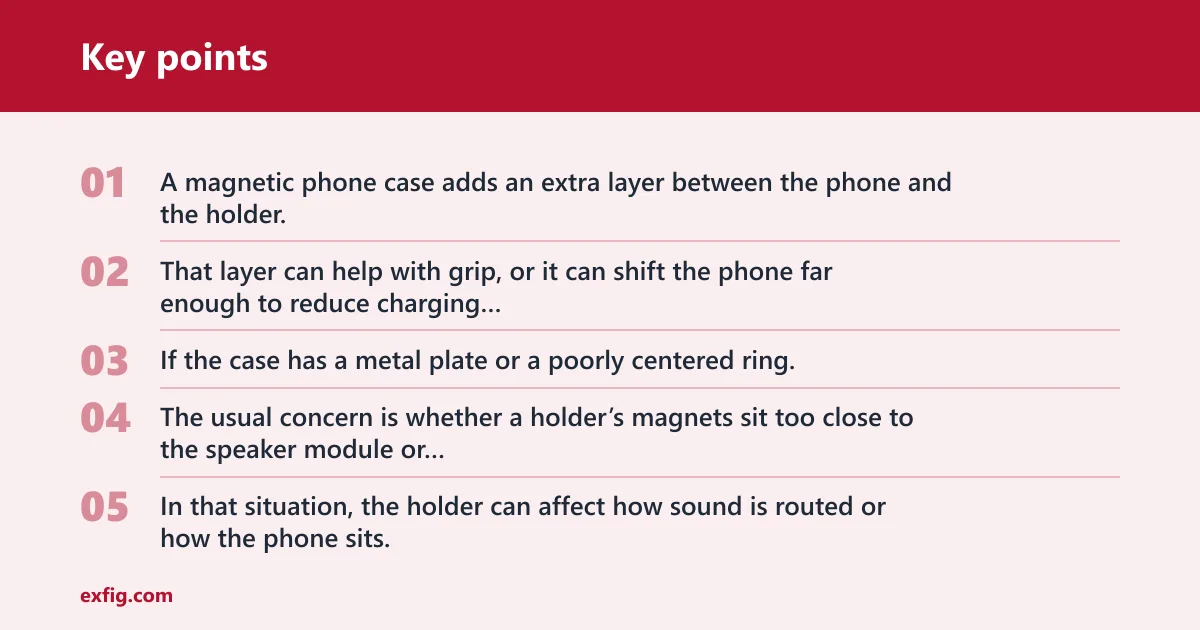
A magnetic phone case adds an extra layer between the phone and the holder. That layer can help with grip, or it can shift the phone far enough to reduce charging quality. If the case has a metal plate or a poorly centered ring, wireless charging and NFC can be the first things to act up.
When speaker placement matters
Phone speakers already contain magnets. That is normal. The usual concern is whether a holder’s magnets sit too close to the speaker module or line up awkwardly with the phone’s chassis. In that situation, the holder can affect how sound is routed or how the phone sits, but it does not normally damage the speaker.
Why camera complaints are usually about alignment, not magnet damage
Camera complaints are often tied to fit, vibration, or the position of the mount, not the magnet itself. If the holder presses on the camera bump or forces the phone to sit crooked, the result can be blur, rattling, or stabilizer noise. That points to poor clearance and alignment, not a magnet breaking the camera module.
Say your phone has a raised camera bar and a magnetic ring case. If the ring is off-center by a few millimeters, the phone may still stick to the mount, but the camera corner can rock against the holder and shake on rough roads. Moving to a better-fitting case fixes the problem without changing the phone.
iPhone and Android: what changes
iPhone and Android phones follow the same broad rule: the magnetic holder is usually fine for the phone, while accessories and alignment decide whether the setup works well. Apple’s MagSafe design proved magnets could be used with smartphones without normal harm to the device, but that does not mean every mount or case is equally well made.
MagSafe and iPhone compatibility
MagSafe is relevant because it gives a built-in example of magnets used in phone accessories without normal harm to the device. That matters for case and mount compatibility. An iPhone with a MagSafe case or ring is more likely to center well, charge correctly, and hold position than a random case with a loose metal plate.
Even so, MagSafe is not a blanket approval for every magnetic product. A weak charger, a thick case, or a badly placed ring can still cause alignment problems. The phone is usually not at risk; the user experience is what changes.
Android phones and flash storage
Android phones use NAND flash memory too, so the storage question is the same as on iPhone. The lack of a mechanical drive means the common “magnet erased my phone” fear does not fit modern Android hardware. If an Android phone behaves oddly near a mount, the likely cause is sensor or charging interference, not storage damage.
Safe use rule
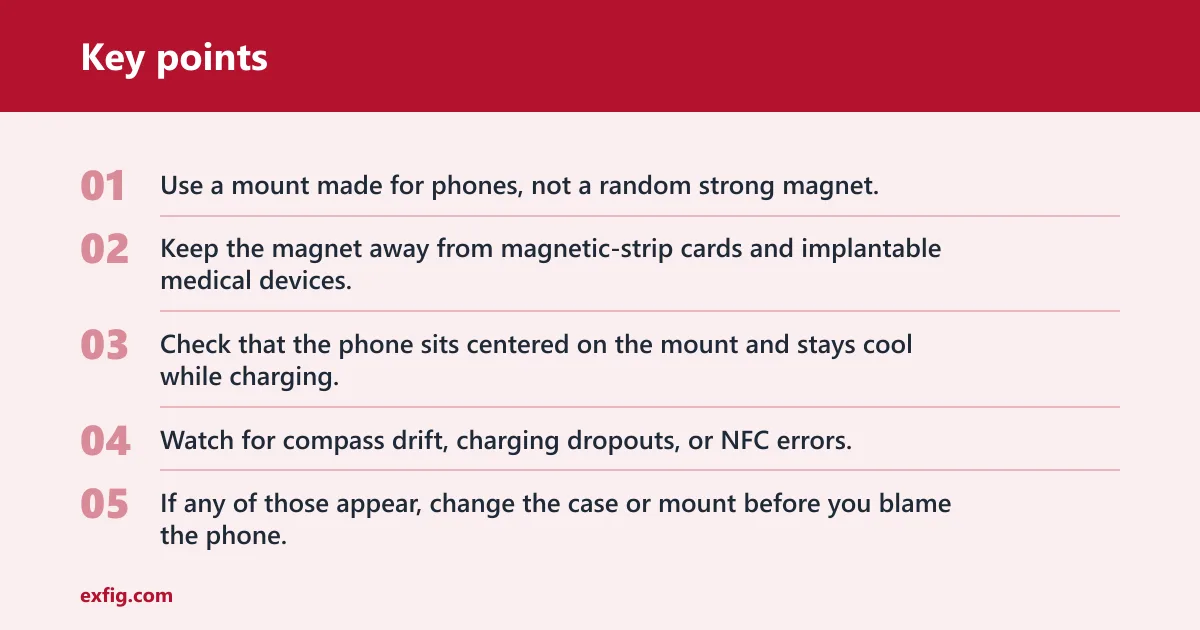
- Use a mount made for phones, not a random strong magnet.
- Keep the magnet away from magnetic-strip cards and implantable medical devices.
- Check that the phone sits centered on the mount and stays cool while charging.
- Watch for compass drift, charging dropouts, or NFC errors.
- If any of those appear, change the case or mount before you blame the phone.
Magnetic holder risk checklist
| Device type | Accessory type | Likely effect | Severity | Action |
|---|---|---|---|---|
| Screen | Magnetic phone holder | No display damage; touch complaints are usually a fit issue | Low | Yes, use it if the screen works normally |
| Storage | Magnetic phone holder | NAND flash memory is not affected by ordinary holder magnets | Low | Yes, no special storage concern |
| Battery | Magnetic phone holder | Lithium-ion battery health is not normally changed by the magnet | Low | Yes, unless the phone gets hot while charging |
| Speaker | Magnetic phone holder | Placement can interfere with fit or sound path | Low to medium | Yes, if sound remains clear and the phone sits flat |
| Compass | Magnetic phone holder | Temporary direction drift or map wobble | Medium | No, move away or recalibrate if navigation acts odd |
| Camera | Magnetic phone holder | Rattle, blur, or misalignment from poor clearance | Medium | Yes, if the camera bump clears the mount cleanly |
| Wireless charging | Magnetic phone holder | Misalignment, slow charging, or charging dropouts | Medium | No, use a case and mount that center the coil properly |
| Credit cards | Magnetic phone holder | Magnetic-strip risk and possible card failure | High | No, keep cards away from the magnet |
Simple yes/no rule
Yes: use the holder if your phone stays centered, cool, and fully functional, and if nearby cards are kept separate. No: avoid the setup if compass drift is persistent, charging is unreliable, the case blocks NFC, or the holder forces the phone into a bent or unstable position. That rule works for both iPhone and Android phones.
Frequently asked questions
Are magnetic phone holders bad for your phone?
No, not in normal use. A magnetic phone holder is usually safe for the phone itself, including the screen, storage, and battery. The bigger concerns are compass drift, charging alignment, and nearby magnetic-strip cards. If the phone sits securely and charges normally, the holder is usually fine.
Do magnetic phone holders damage phone?
They usually do not damage the phone. Most problems people notice are temporary and tied to accessory fit, not lasting harm. If a holder causes heat, charging failure, or repeated misalignment, that setup should be changed. The phone itself is rarely the part that fails.
Will a magnetic phone holder damage phone?
In ordinary use, no. Modern smartphones are built around screen technology, NAND flash memory, and lithium-ion batteries that are not normally harmed by holder magnets. The exception is when the mount is poorly matched to the case, blocks wireless charging, or sits near cards or medical devices that should stay away from strong magnets.
Is magnetic phone case bad for your phone?
Not by itself. A magnetic phone case can be safe, but the case and insert matter. If the ring is off-center, too thick, or made with a poor metal plate, charging and NFC can suffer. The phone usually stays intact; the accessory is what needs checking.
Are magnetic car phone holders bad for your phone?
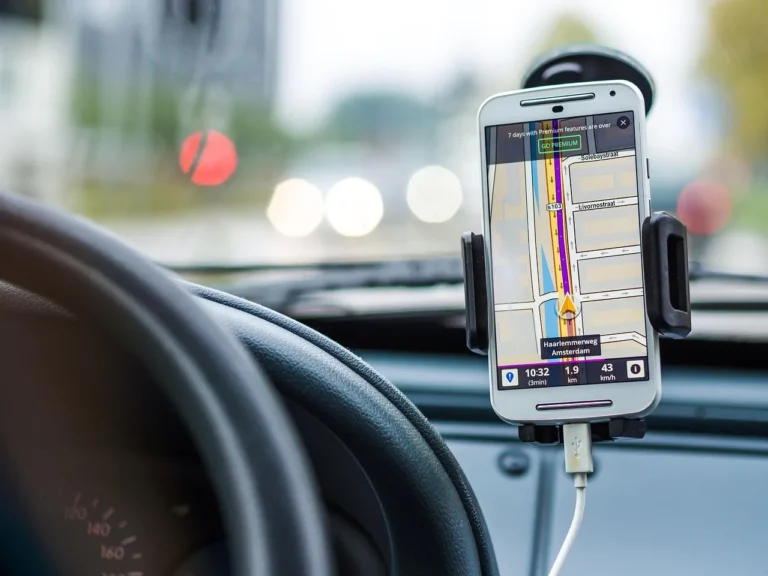
Usually no. Car holders are common because they free up your hands and keep the phone visible. The main risks are compass drift, charging misalignment, and poor clearance around a camera bump. If the mount is made for phones and the phone stays cool, it is typically safe.
Can a magnet mess up a phone?
It can mess up certain functions for a moment, but that is different from damaging the phone. Compass readings, wireless charging, and magnetic-strip cards are the most common trouble spots. Screen performance, NAND flash storage, and lithium-ion battery health are not typical magnet damage targets on modern phones.
Are magnetic holders bad for your phone?
No, not when they are designed for phones and used with the right case or ring. The practical rule is simple: safe for the device, annoying for the sensor or charger if alignment is poor, and avoidable for cards or implants if you keep them away from the magnet.